Monday, February 16, 2009

Hungarian Lecso

Having a Hungarian husband has it's advantages - fabulous food and great recipes in my repertoire.


Hungarian food includes lots of fresh tomatoes, peppers and onions. Lesco, made from these ingredients is a very simple yet versatile ragout. It can be served as a side dish, served over rice or noodles, or it can be used as a base for many Hungarian recipes, such as goulash and paprikas. I will talk about these in a later post.

This is my take on Hungarian Lesco using csabai salami sausage which I have served over rice. Csabai is a delicious Hungarian smoked pork sausage seasoned with sweet or hot paprika and garlic. If you can't find csabai, you can use Spanish chorizo sausage which is similar.


As far as I am concerned, there is no debate on what is the best paprika. I admit to being biased on this issue. I have only tried one Spanish paprika, La Chinata, a sweet smoked variety and considered one of the best. It was fairly pricey at $18.00 AUS for a small tin and I didn't particularly like the smoky taste. However, for me the real deal is Hungarian Paprika... as good as it gets. I have tried many varieties of Hungarian paprika. It is known to be richer and stronger than Spanish paprika.

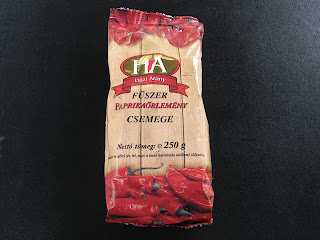
Hungarian paprika can be mild and sweet, semi-sweet and medium-hot or it can be very hot. The colour varies from bright red (milder) to a light red (the hottest). My favourite brand is Házi Arany (pictured below) which I get from a continental butcher in Oakleigh, Melbourne. I prefer the csemege which means 'exquisite delicate'. It has a sweet, slightly spicy flavour without being too hot. If you prefer a hotter variety and a spicier taste, go for the csemege csípős which translates as 'pungent exquisite delicate'. Erös is the hottest variety.


Hungarian Lesco

This recipe makes 4 generous servings, 15 minutes to prepare and about 25 minutes to cook.

Ingredients:
2 tablespoons oil
1 large onion
500g yellow banana peppers, cut into approximately 2cm squares
I large red capsicum, cut into approximately 2cm squares (optional but adds colour and texture)
2 large ripe tomatoes, (or 1/2 tin canned tomatoes) chopped
1 finely chopped red chilly (optional for hotheads)
1 csabai sausage cut into 1/2 cm slices
1 tablespoon sweet Hungarian paprika (read blurb above)
salt and freshly ground black pepper to taste.
crushed garlic (optional)

Use a large frying pan, saute the onion in the oil over low heat until it is caramelized, about 5 minutes and you'll get that lovely waft of the caramelized onion. Add the chopped tomatoes, banana peppers, red capsicum, (chilly if using), csabai sausage, paprika, (garlic if using), salt and ground black pepper and cook for another 15 minutes, stirring occasionally. Don't overcook the lesco or you will end up with a tomato sauce.

Sunday, February 1, 2009

Slow Cooked Ocean Trout with Wasabi Dressing


The temperature has been soaring in Melbourne in the last few days (up around the 44°C mark) hence the need for simple low temperature cooking. This is my adaption of Jacques Reymond's fabulous Slow Cooked Ocean Trout which I sampled at the Taste of Melbourne 2008. The addition of a simple wasabi egg yolk sauce transforms this fish into a gourmet meal.

Slow Cooked Ocean Trout with Wasabi Dressing

4 ocean trout fillets
1 tablespoon olive oil
1 Lebanese cucumber
Egg Yolk Dressing:
2 egg yolks
1 teaspoon wasabi paste (or to taste)
1 teaspoon sugar
freshly ground pepper
salt
300 ml fresh cream
verjuice (or dry vermouth)
Dill, coriander and broadleaf parsley for garnish.

Remove any bones from the fish with tweezers. Coat the bottom of the baking tray with the olive oil and add the fillets skin side down. Put the pan in to a cold oven then heat it to 120°C. The fillets will take 25 minutes to cook. Meanwhile, mix the egg yolks, wasabi, sugar, pepper and salt with some of the cream to get a smooth consistency. Add verjuice or vermouth to taste then add more cream until you reach the desired consistency. This will thicken as it stands. If the mixture curdles, beat in another egg yolk then add some more cream.

To serve, place some cucumber slices on the plates, then the cooked ocean trout fillets. Drizzle with the egg yolk dressing and scatter dill, coriander and parsley on top. Enjoy.


Sunday, January 25, 2009

Pear and Leek Soup


This is an elegant soup which I have adapted from a recipe by Beverley Sutherland Smith from her beautiful book 'A Taste of Class' (1980) which is now out of print. If you can find any of her books anywhere, grab them as she is a brilliant epicurean cook and author.

Note: It is important to use green pears as ripe pears will make the soup too sweet.

For the soup:

60g (2 oz) butter
1 bunch leeks (include a little of the green)
1 large potatoes, peeled and cubed
2 - 3 (500g) firm green pears
1 litre (4 cups) chicken stock
salt and ground pepper to taste

For garnish (optional):
Pouring cream and chopped fresh chives or fried leeks.

Slice leeks thinly into rings. In a large bowl of water, wash leeks and leave to drain well in a colander or sieve. In a heavy based saucepan, melt the butter. Saute the leeks until they are soft but don’t let them brown. Add the chopped pears and saute for a further few minutes. Add the potato cubes, cover with stock, season then simmer the soup gently until the potatoes are tender (approximately 30 minutes). Blitz soup until smooth and creamy.

To serve: Pour the cream gently over the back of a spoon to form a spiral pattern. Garnish with chives.

Baby Carrot Cakes


These lovely little morsels have been adapted from Loretta Satori’s Carrot Cake from 'The Cooks Book - Patisserie' (2004). 

Loretta Sartori is described as a pastry-chef extraordinaire, and has the reputation as being Melbourne’s best-kept culinary secret. She has given lessons at (Accoutrement) in Mosman and The Essential Ingredient in Melbourne.

Sartori's original recipe will make two 20cm round cakes. I have made 24 little cakes with the same quantity. The addition of the pineapple (preferably unsweetened) makes these little cakes very moist and although it is an oil based recipe, the cakes are lovely and light.

Baby Carrot Cakes

6 (300 g) medium eggs
400 g brown sugar
500 ml sunflower oil
450 g grated carrots
1 tin (350 g) crushed pineapple, well drained
180 g chopped walnuts
525 g all purpose flour
6 g bicarbonate of soda
10 g baking powder
6g cinnamon
4 g salt

Whisk the eggs and sugar until they are thick and pale. Using a slow speed on you mixer, carefully pour in the oil until it is absorbed. Stop the mixer and fold through the grated carrots, crushed pineapples and walnuts. Fold in the sieved dry ingredients. Spoon the mixture into the prepared cake tins. Bake at 175°C (350°F) for 20 to 25 minutes. If you prefer to make larger cakes, use 2 X 20 cm round cakes and bake for 35 to 45 minutes.

You can sprinkle castor sugar and cinnamon on top before they go in to the oven or leave them plain if they will be frosted later when cold.

Cream Cheese Frosting

500g cream cheese at room temperature
100g icing (confectioners) sugar
1 lemon, zest and juice
zest for decoration

Cream the cheese, icing sugar, lemon juice and zest until light and smooth. Spread over the tops of the little cakes. Sprinkle extra zest on top.